Can I use a Plymouth Pilot single handed?
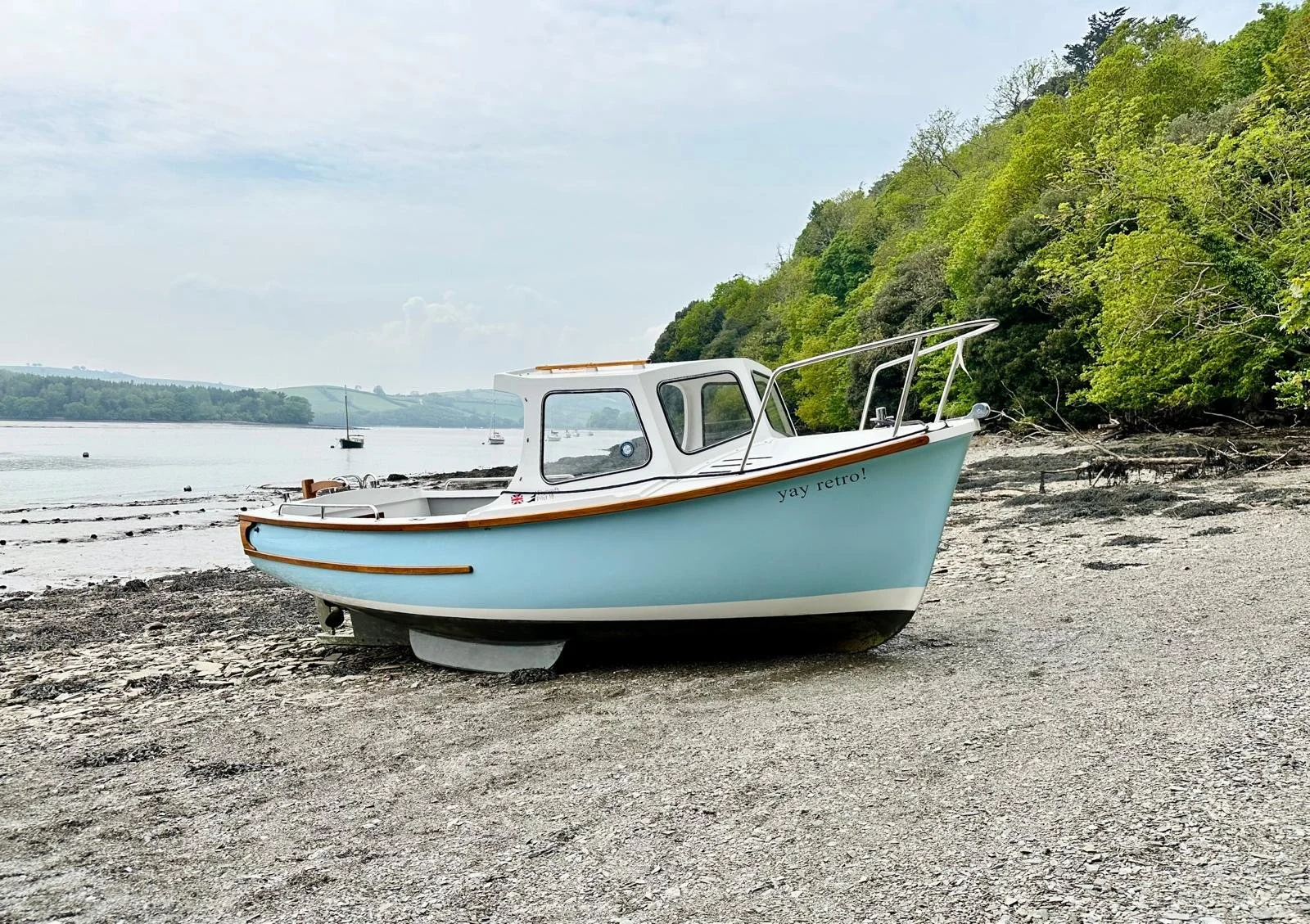
Absolutely! A Plymouth Pilot is well-suited for single-handed operation, offering a tranquil and enjoyable experience on the water.
What engines can I choose from?
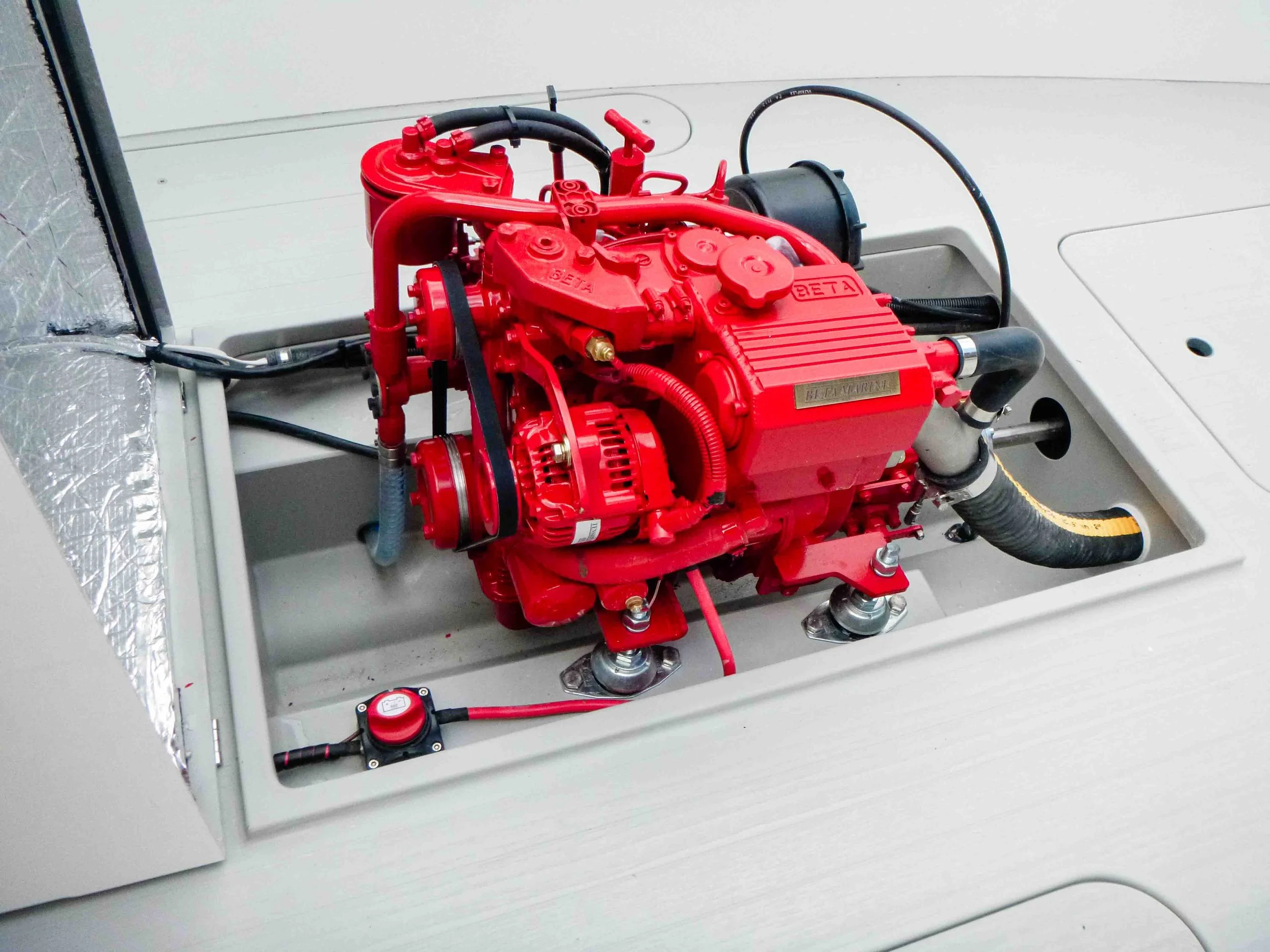
We currently offer a choice of Beta Marine or Yanmar diesel engines, as well as ePropulsion electric motors for those seeking a cleaner, quieter and more environmentally friendly option.
What fuel efficiency can I expect?
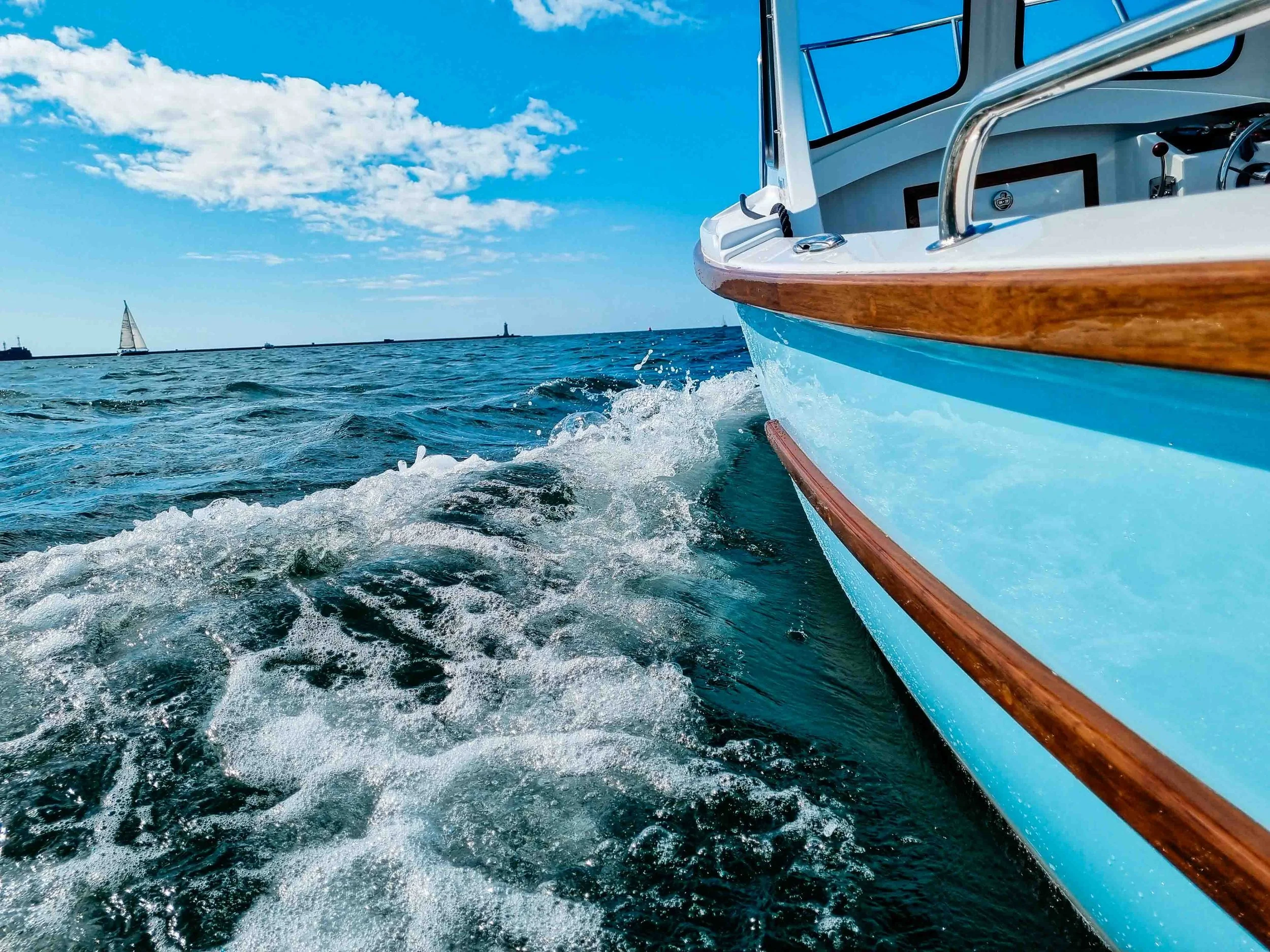
One of the greatest advantages of a displacement boat is their efficiency through the water. They are designed to push the water aside as they are propelled forward.
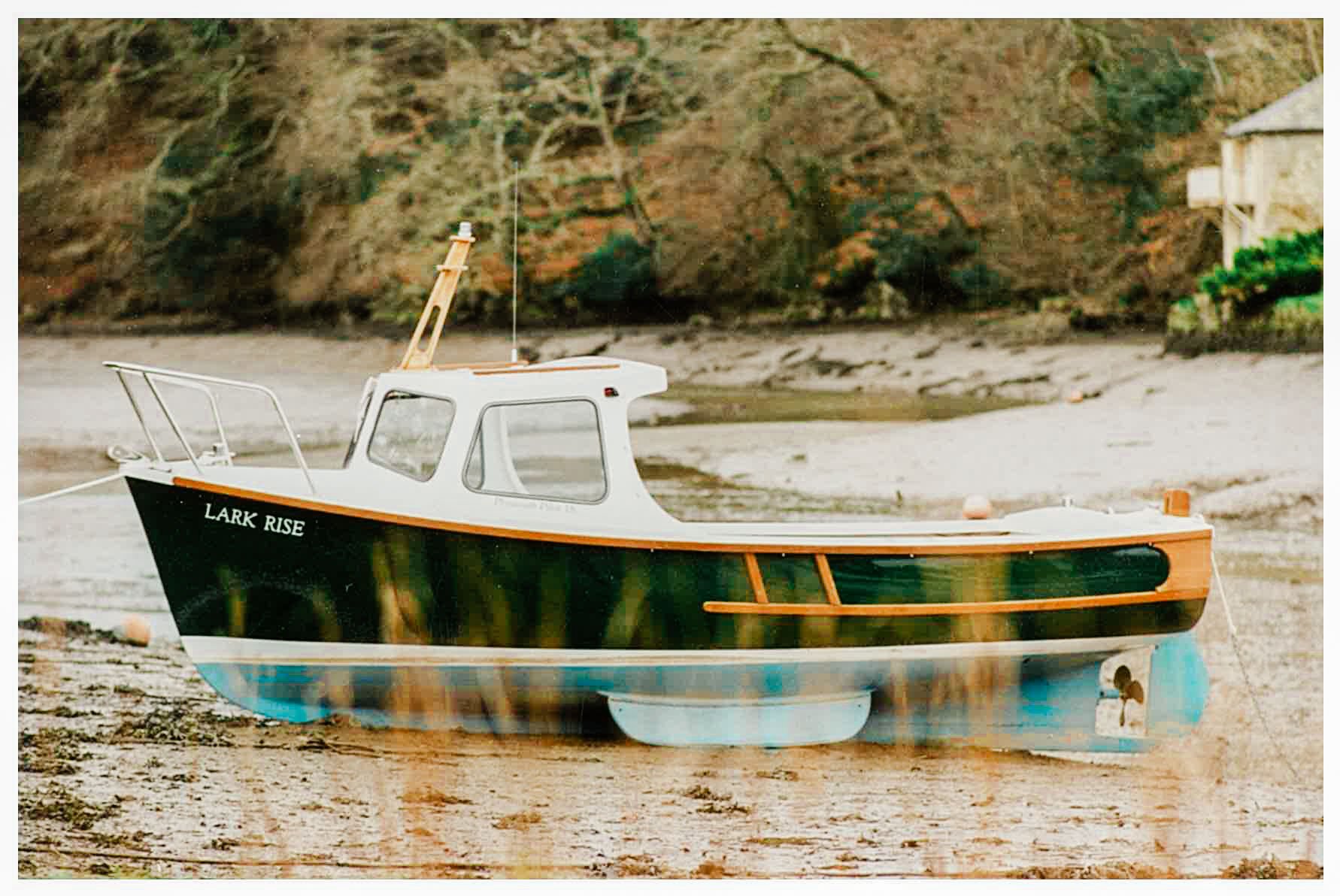
Can a Plymouth Pilot dry out on a mooring?
In a word, yes! Thanks to their substantial keel and supporting bilge keels, your Plymouth Pilot will be more than comfortable taking to the ground intentionally (or unintentionally!)
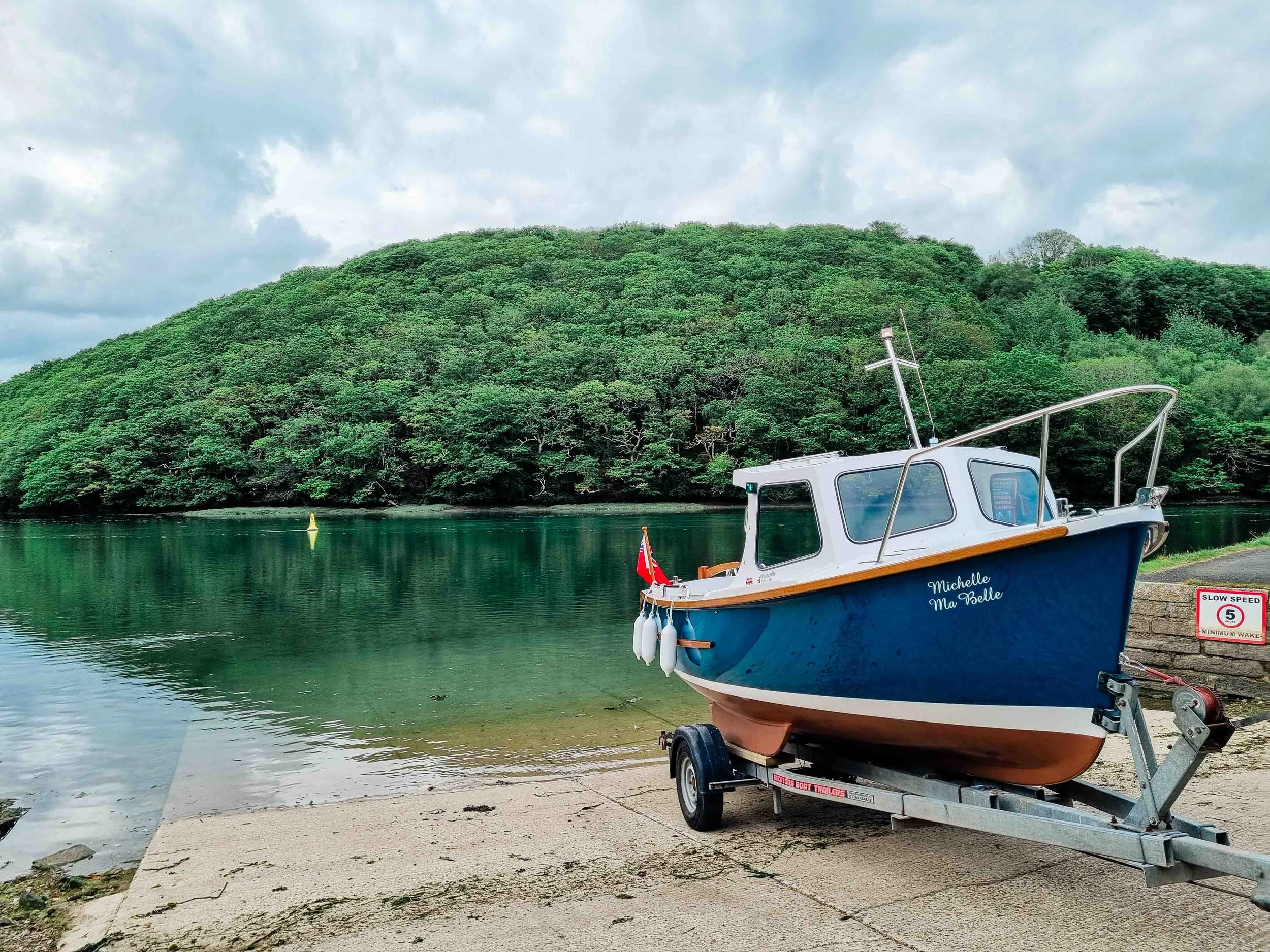
Can you launch and recover a Plymouth Pilot from a trailer?
Yes, you can. With a correctly set up trailer, launching and recovering a Plymouth Pilot 16’ and 18’ is a breeze.
Inspiration, Advice, Boat Knowledge, and FAQs
Tips and tricks to help Plymouth Pilot owners get the very best from their boats and adventures.
Frequently Asked Questions
-
The speed of any displacement hull is primarily limited by its hull speed, which is determined by the waterline length. Although this can be exceeded, it requires significantly more power and is usually inefficient.
The table below provides approximate Cruising speeds and Max speed, which will vary depending upon the engine installed.
Pilot 16’ 3.5kts 6.5kts
Pilot 18’ 4.2kts 7.5kts
Pilot 24’ 5.5kts 8.5kts
For further information on displacement hulls, read our blog article. (Link to a blog)
-
The capacity of a Plymouth Pilot will depend on which specific model you are look at.
• Plymouth Pilot 16': This model typically accommodates up to 4 people comfortably.
• Plymouth Pilot 18': This larger model can hold 6 people.
• Plymouth Pilot 24': The largest in the range, it has a capacity for 8 people.
These capacities can vary depending on how the boat is equipped and configured. (Link to a blog) Expand further – talk about RCD?
-
In a word, yes! Thanks to their substantial keel and supporting bilge keels, your Plymouth Pilot will be more than comfortable taking to the ground intentionally (or unintentionally!). As you can see from the picture, she sits perfectly upright and the propeller is protected by a timber skeg. (Link to a blog)
-
Yes, you can. With a correctly set up trailer, launching and recovering a Plymouth Pilot 16’ and 18’ is a breeze. We would recommend a trailer with rollers for the keel and bunks under the bilge keels to make the process as easy as possible. The Plymouth Pilot 24’ can also be trailer launched, but due to its size, it is a little more involved! (Better image required) (Link to a blog – Trailer Maintenance; What do I need to consider when buying a trailer.)
-
Absolutely, some of the best boating days can be found over winter. As long as you have prepared appropriately and wrap up warm! The cuddys available for all our boats offer excellent protection from the weather and the optional rear privacy cover can act as a temporary bulkhead for even more comfort. Our Plymouth Pilot 24’ has the option of a diesel heater for those frosty mornings out on the water.
-
One of the greatest advantages of a displacement boat is their efficiency through the water. They are designed to push the water aside as they are propelled forward. Planing counterparts, require additional power to ride on top of the water. Also, their smooth round profile reduces drag, allowing the boat to glide efficiently through the water, albeit at lower speeds.
Below is a table of the typical cruising fuel efficiency for the Plymouth Pilots, with their standard engines installed
Cruising speed
(kts) Efficiency
(L/hr)
Pilot 16’ 3.5 0.75
Pilot 18’ 4.2 1.0
Pilot 24’ 5.5 3.0
For more information on see our blogs – “Understanding Hull Forms:
A Comprehensive Guide for Small Boats” and Understanding Displacement Hulls:
Features, Advantages and Disadvantages
-
Absolutely! A Plymouth Pilot is well-suited for single-handed operation, offering a tranquil and enjoyable experience on the water. Whether you're opting for the solitude of a solo fishing trip or managing a voyage when your usual boating companion can't join, the Plymouth Pilot is designed to perform reliably with just one person at the helm.
With its long keel and large rudder, the boat provides exceptional stability and predictable handling, making it easy to manoeuvre alone. The excellent all-round visibility across the entire Plymouth Pilot range ensures you can confidently navigate without needing additional crew.
Since each Plymouth Pilot is made to order, you have the flexibility to customise your boat with features that suit your preferences and mooring arrangements, enhancing its suitability for single-handed use.
-
We currently offer a choice of Beta Marine or Yanmar diesel engines, as well as ePropulsion electric motors for those seeking a cleaner, quieter and more environmentally friendly option.
If you have experience with a different engine brand, we’re happy to explore alternative options to find the best fit for your needs. There are a few important things to consider when choosing the right engine, including your familiarity with the engine manufacturer, local support networks, as well as cost and availability of spare parts.
Our aim is to ensure your Plymouth Pilot is equipped with a reliable and efficient engine that suits your intended use and keeps you confident on the water. Whether you prioritise fuel efficiency, ease of maintenance or sustainability, we’ll work with you to make the right choice.
BOAT PERFORMANCE AND APPLICATIONS
CARE, MAINTENANCE, AND OPERATION
-
Most manufacturers recommend you service an engine typically after 150-250 hours of use. For new boats, we usually recommend doing some basic checks after the first 20 hours to ensure all is running smoothly. However, it is good practice to service your engine annually as this prevents potentially expensive repairs down the line.
Beta and Yanmar offer a self-service warranty on new engines provided genuine parts are used. This makes servicing an engine yourself more feasible and cost-effective. Haven’t done a marine engine service before? Never fear, we’ve got you covered in our blog section. Servicing your Marine Diesel Engine: Your How to Guide (Link to blog) -
In a single word, yes! Boats are exposed to the elements all year round but ineffective or improper preparation for the harsher months can be detrimental to the longevity of any boat. Winterising a boat can be done by all boat owners and requires only a bit of knowledge and forward planning.
For a full run down of the essential steps to settle your boat for the colder months, read our article Essential Guide to Winterising Your Boat: Protect Your Investment for the Cold Season. (Link to blog)
-
While boat ownership will sometimes require the help of professional providers, there are many areas of boat servicing and maintenance that the average boat owner can undertake, saving time and money. These include:
• Fibreglass repair
• Bilge pump repair and replacement
• Electrical system troubleshooting
• Engine maintenance and servicing
• Repair of leaking windows and hatches
• Fuel system maintenance
• Propeller repair and maintenance
• Deck cleaning and maintenance
Our blog has plenty of helpful articles and videos to give you the skills and confidence to do these routine tasks yourself. To get you started, look up Servicing your Marine Diesel Engine: Your How to Guide or DIY Gelcoat Scratch Repair: Professional Techniques for Fibreglass Boats. (Link to blogs)
-
Gel coat scratches are inevitable in boat ownership, but the good news is that they don’t have to be a costly expense if you’re willing to give it a go yourself and have a little patience in learning a new skill. To help you gain some new knowledge, we’re put together a step-by-step guide to take you through the process and help you achieve a seamless finish. DIY Gelcoat Scratch Repair: Professional Techniques for Fibreglass Boats. (Link to blog)
-
One of the greatest qualities of fibreglass is its exceptional longevity and low maintenance requirements. With just a bit of care, your fibreglass boat can remain in excellent condition for years to come.
• Rinse regularly
After every use (or when you get the opportunity) rinse your boat down with fresh water to remove salt, dirt and debris. Saltwater, in particular, can cause dulling or damage over time if left unchecked, so regular rinsing is key to maintaining the surface's integrity and appearance
• Protection from UV damage
Fibreglass is durable, but prolonged exposure to the sun can cause fading or surface deterioration. To protect your boat:
o Apply a high-quality marine wax once or twice a year to create a protective barrier.
o Use a boat cover when the vessel is not in use, especially during winter storage, to shield it from UV rays and environmental pollutants.
• Address Scuffs and Scratches Promptly
Scuffs and scratches are inevitable, especially with regular use. The good news is that repairing them is often straightforward. Tackle minor blemishes as they appear, using fibreglass repair kits or gelcoat touch-ups to prevent them from worsening.
Regular upkeep doesn’t just keep your boat looking "ship-shape", it also helps preserve its resale value. A well-maintained fibreglass boat is far more appealing to potential buyers and can command a higher price when it’s time to sell.
-
Yes, all Plymouth Pilots are fitted with a Whale manual bilge pump as standard. If required, we can also install an automatic electric pump for when you are away from your boat for further piece of mind.
-
No, all water drains into the bilges where it can be pumped out. Whilst it may seem less convenient than its self-draining counterparts, there are a couple of significant advantages which we felt were more important during the boat’s development.
Greater stability
Lower Centre of Gravity: Non-self-draining boats typically have their cockpit or deck set lower in the hull, which helps lower the boat’s centre of gravity. This often results in improved stability, particularly in smaller boats.
Enhanced Load Carrying: The lower deck design allows for a more stable ride when carrying heavy loads, making these boats ideal for activities like fishing or transporting goods.
Larger, Deeper Cockpits
Increased Usable Space: Without the raised decks needed for water drainage, non-self-draining boats often have more room in the cockpit or deck area. This design is particularly beneficial for working boats or leisure craft where extra space is a priority.
Comfortable Seating: The deeper cockpit provides a more sheltered and secure seating area, especially useful in rough conditions or for families with children.
-
ItemSafety on the water is paramount and equipping your boat with essential safety gear is critical to ensuring a secure and enjoyable experience. Below is a list of the key items every boat owner should consider:
• Lifejackets (PFDs): The most important piece of safety equipment. Ensure every person onboard has a properly fitted lifejacket. Regularly inspect for wear and tear.
• Anchor and Rope: Choose the right anchor for your boat size and seabed type to prevent drifting in emergencies.
• Fire Extinguishers: Required for boats with engines or electrical systems. Check them regularly and replace when expired.
• VHF Marine Radio: Reliable communication for emergencies, especially offshore. Learn how to use channel 16 for distress calls.
• Flares/Distress Signals: Critical for signalling in emergencies. Store them in waterproof containers and check expiration dates.
• EPIRB and PLBs: Essential for offshore ventures, helping rescuers pinpoint your location. Ensure they are registered with the Maritime & Coastguard Agency (MCA).
• First Aid Kit: Stock with essentials like dressings, antiseptic wipes and pain relief. Add seasickness tablets if needed.
• Navigation Lights: Legally required for night or poor visibility navigation. Keep spare bulbs onboard.
• Bilge Pump or Manual Bailer: Prevent water ingress from becoming a critical issue. Test pumps regularly.
• Navigation Equipment: A compass and charts act as vital backups to electronic GPS. Learn how to use them.
Aside from having these items onboard, it’s essential to know how to use them. Proper preparation and regular maintenance of your safety equipment ensure you’re ready for most situations, helping to protect everyone onboard. Familiarity with your gear is just as important as having it, giving you the confidence to handle emergencies and enjoy a safe, secure boating experience.
-
Absolutely. With over 50 years of boatbuilding expertise, we understand that after-sales support is just as crucial as the initial purchase. We take pride in maintaining strong, lasting relationships with our customers long after delivery.
Whether you prefer us to manage the maintenance directly or need help finding reliable services locally, we’re here to assist. Our ultimate goal is to keep you on the water for as long as possible, offering expert advice and support whenever needed. When you invest in one of our boats, you gain not just a vessel but a dedicated partner in your boating journey.
For a more detailed insight into these questions, read our blog.
Here is a selection of articles you might want to look at on our blog.
Read our Blog
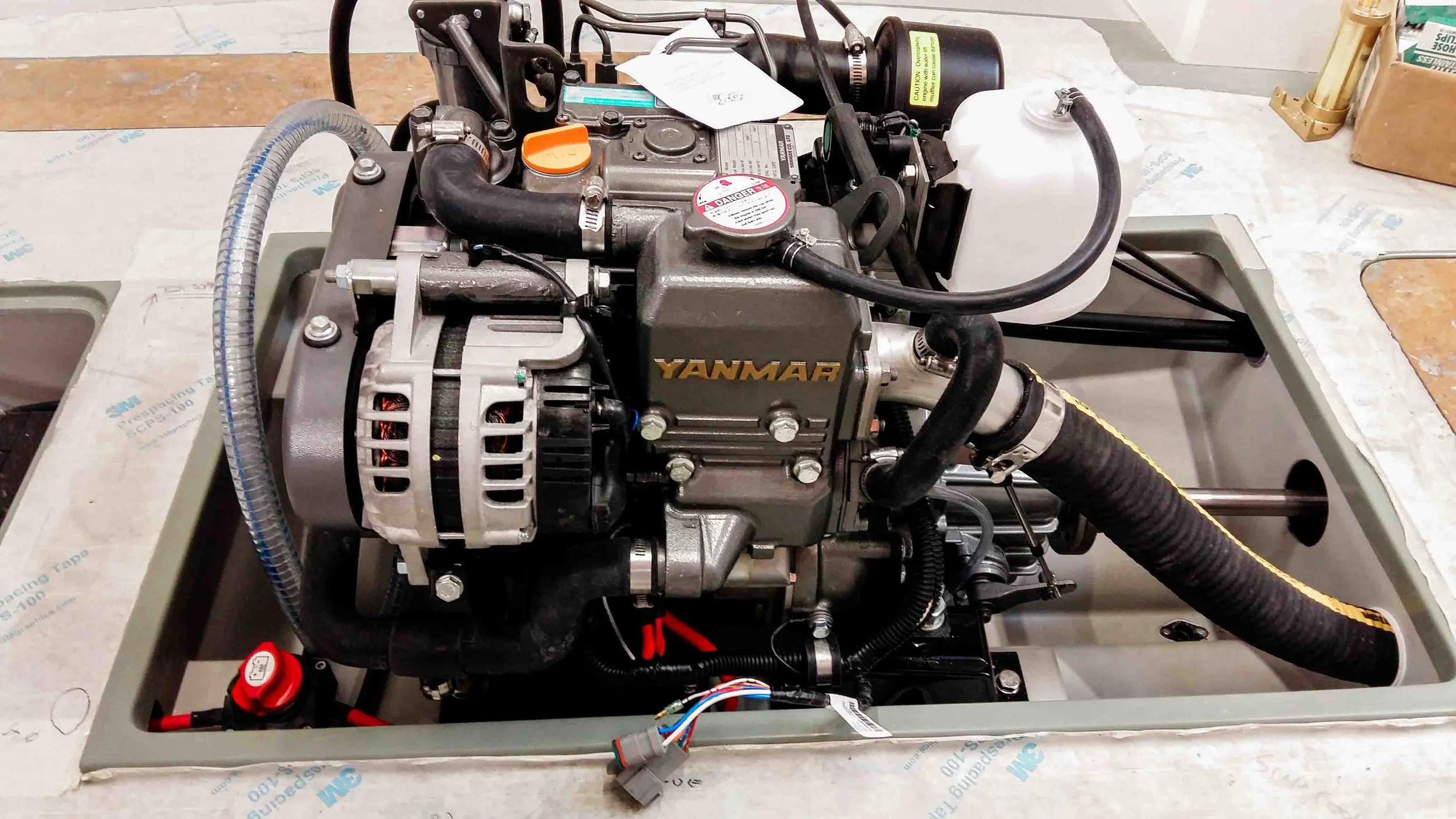
A GUIDE TO DIESEL
ENGINE SERVICING
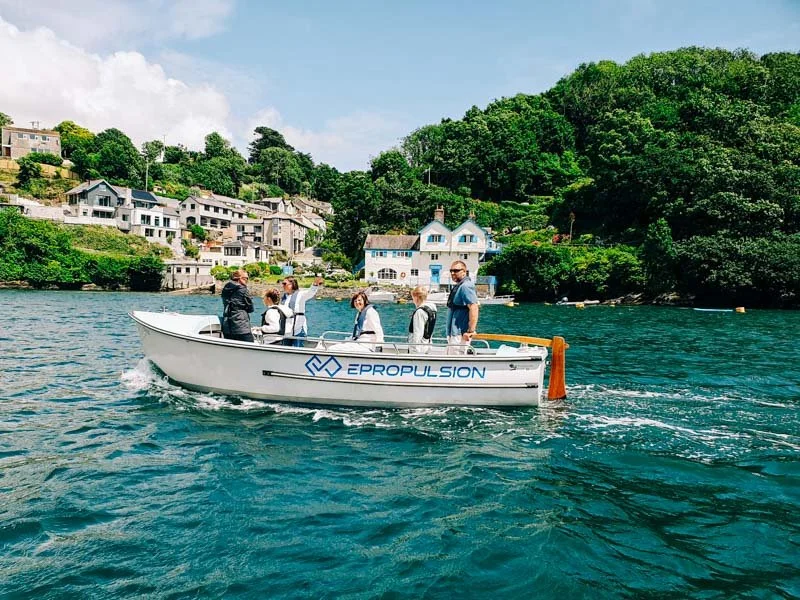
STATIC - AN EPROPULSION P18 EXPERIMENT