‘Static’ our Electric Plymouth Pilot 18
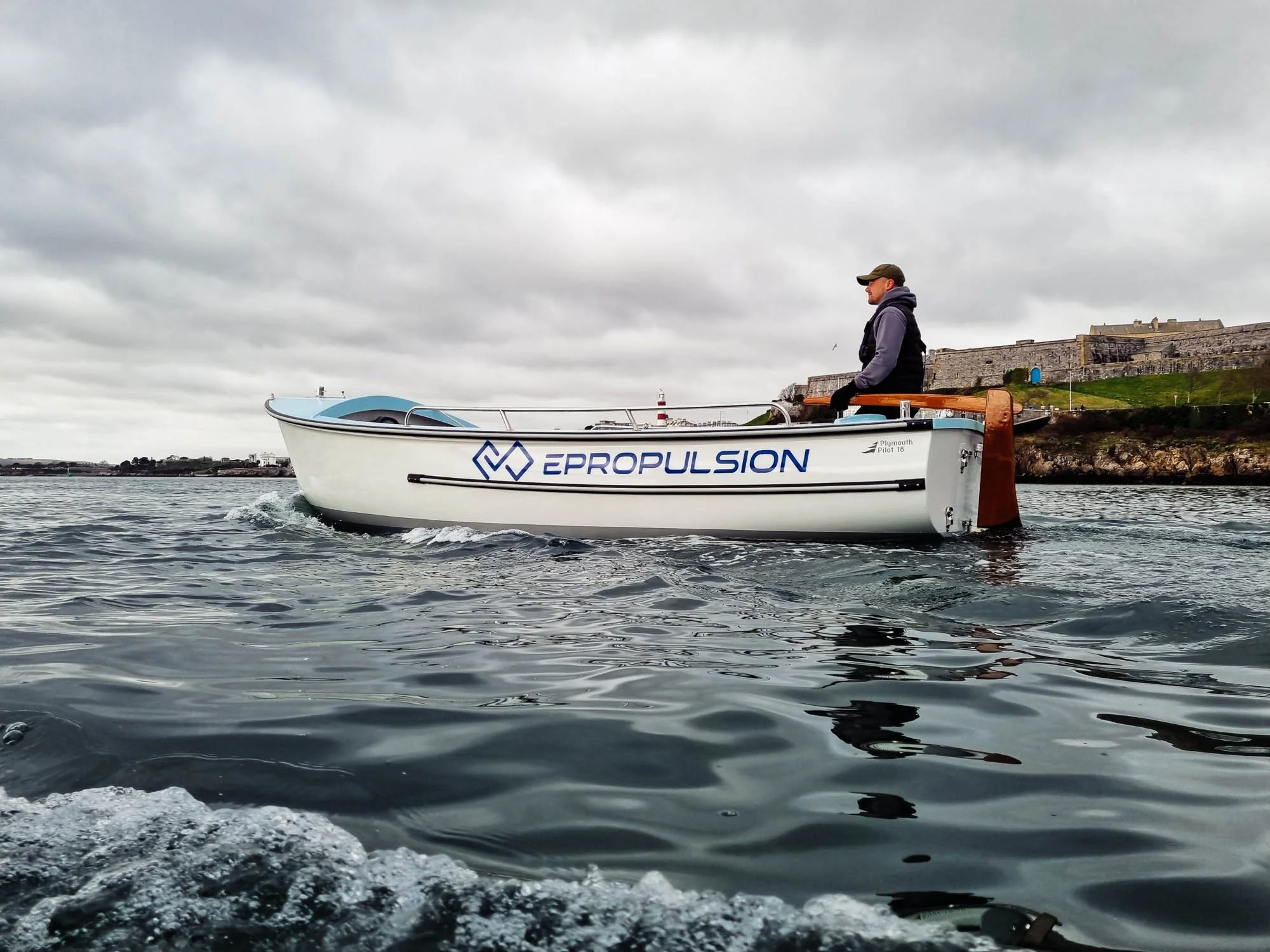
The primary purpose of this project was to explore the technical feasibility of building/converting the Plymouth Pilot 18' to electric propulsion. By leveraging the inherent advantages of the displacement hull form, low power requirements and ample space for motor and battery systems, the aimed was to assess the performance characteristics of an electric model compared to its traditional diesel-powered counterpart. Additionally, the project would highlight suspected benefits such as reduced onboard noise, lower maintenance requirements and enhanced ease of use.
Objectives
Technical validation: Demonstrate the feasibility of building or retrofitting the Plymouth Pilot 18' with electric propulsion system while ensuring maintaining normal performance or functionality.
Performance analysis: Compare the operational characteristics, including speed, range and reliability, of the electric model against the diesel-powered version.
Environmental impact: Evaluate the sustainability advantages, including reduced emissions and lower ecological footprint.
Market testing: Gauge interest from potential recreational and professional users and gather insights for broader application across our product range.
System selection: Research and identify the most suitable propulsion system: inline mounted motors, outboards, or pods. Assessing the credentials against the performance and usability goals.
Product strategy: Lay the groundwork for offering electric options across the Plymouth Pilots range, setting a new benchmark for innovation and sustainability in small boats.
Background and Market Research
Industry Trends
The maritime industry's future is increasingly focused toward electric propulsion. With international, national and sector-specific policies targeting a zero-carbon future, electric power has emerged as the most viable and sustainable option for the boating industry. While adoption is already underway in the large commercial sector, similar advancements are expected to cascade to small leisure and professional boats in the near future.
The shift to electric propulsion is driven by several key factors:
The normalisation of electric transportation, spurred by the widespread adoption of electric cars.
The growing environmental consciousness among consumers, paired with increasing scrutiny of carbon emissions.
The desire for a more pleasurable experience on the water with quiet operation being a key benefit.
Despite these drivers, few small boat builders currently offer electric propulsion as a standard feature, presenting a unique market opportunity.
Target Audience
The electric Plymouth Pilot 18' appeals to a broad spectrum of users, both recreational and professional:
Recreational users: For leisure boaters, the reduced maintenance requirements and almost silent operation significantly enhance the overall experience of both use and ownership. The system's ease of operation and flexibility in battery configuration allow users to adapt the range by increasing battery capacity, making it a highly attractive choice.
Professional users: Inshore fishing operators, sailing and yacht clubs, harbour authorities and water taxi services can benefit from the safety, ease of use, and low operating costs of electric propulsion systems.
Electric propulsion addresses several shortcomings of traditional diesel-powered boats, including:
The elimination of fuel handling and associated smells and contamination risks.
Safe and straightforward operation, ideal for less experienced operators.
Near-silent running, enhancing comfort and enjoyment.
Almost maintenance free operation.
The Plymouth Pilot 18's displacement hull makes it inherently well-suited to electric propulsion. Its low power requirements align perfectly with the capabilities of electric systems, ensuring efficiency without compromising performance. This project aims to demonstrate how the design can evolve to meet the growing demand for sustainable and user-friendly boating solutions.
Design and Development Process
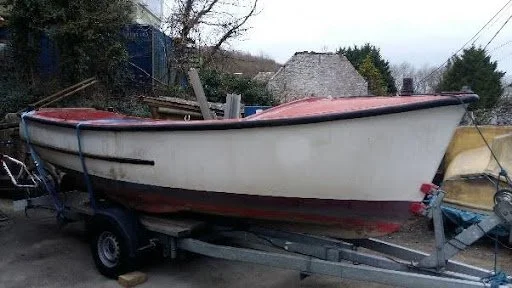
The foundation of this project was a former fishing boat selected as a suitable testbed for modification. The initial step involved assessing whether to use a traditional inline motor on a shaft or a pod drive. While the traditional shaft line required no structural modifications, the use pod drive presented a unique opportunity to the possibility of completely flush deck. By mounting the batteries strategically, it may prove possible to eliminate the engine box. This design choice, however, necessitated a modification to the aft end of the keel to accommodate the pod drive.
System Selection and Goals
From the outset, the performance goals were clear. Achieve a top speed of 5 knots with an operational duration of 6 hours at cruising speed. The propulsion system needed to be straightforward to install and maintain, aligning with the long-term goal of incorporating electric options into the standard product range. The team prioritised a plug-and-play solution that did not require advanced electrical knowledge for setup.
After evaluating the market, and engaging several potential suppliers, the ePropulsion 3kW Pod Drive was selected for its combination of performance, reliability and ease of installation. The E80 battery system was chosen due to its compact size, enabling two batteries to fit neatly under the existing engine box while maintaining proper weight distribution.
Hull Modifications and Installation
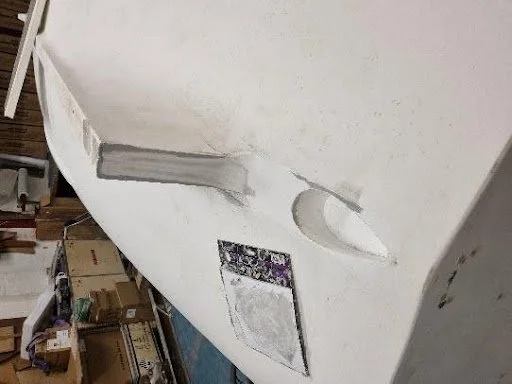
Significant modifications were made to accommodate the pod drive. The aft face of the keel was moved forward to provide sufficient space for the pod and propeller, the skeg would be extended to offer protection when the boat grounded. For future production, a pre-moulded insert was designed to eliminate the need for additional work once hulls are released.
The ePropulsion system’s plug-and-play design streamlined the installation process. The kit included the pod, controller, instrument panel, battery and charger. Beyond charging the batteries and calibrating the throttle, minimal setup was required.
Whilst undertaking the installation it was decided to install a remote switch to operate the system, further improving user convenience and a Victron 48V-12V DC-DC converter so that we could install and bilge pump and navigation lights.
Battery Configuration
The ePropulsion E80 batteries were positioned in the former engine location. Initially, the goal was to eliminate the engine box, but the battery's size made this impossible. However, this placement allowed the boat's weight distribution to remain similar to the diesel-powered model, requiring only minimal ballast adjustment to ensure the boat sat correctly on its waterline.
Testing and Validation
Performance Results
Performance runs were conducted with and against the tide to gather an average performance result. The boat was ballasted to the correct waterline, carrying an anchor, warps, fenders, and three crew members. Weather conditions were southerly winds at 10 knots, 15°C, and smooth seas.
If you would like to see the actual data please download the full report here.
Whilst the power requirement is relatively low below 4kts, the increase in power required to achieve higher speeds is more pronounced, as we approach the boats hull speed. For example, increasing the speed from 4.65 knots to 5.3 knots demands a jump in power from 1297 W to 2854 W.
Operating at or below 3 knots would maximise the battery's operational time, while pushing the boat to its top speed of 5.3 knots would quickly deplete the battery due to the exponential rise in power consumption. This underscores the importance of balancing speed and efficiency, particularly in applications where limited energy reserves must be carefully managed.
Challenges Encountered
The modifications to the hull were straight forward, and in production boats, they would not be necessary. The components supplied by ePropulsion were particularly easy to fit, with clear instructions and a true plug-and-play setup that required minimal effort beyond calibration and basic connections.
One notable observation was a change in the boat's low-speed handling, particularly when manoeuvring in close quarters. While the throttle response and handling under way showed no discernible difference compared to the diesel-powered version, the astern performance was slightly lacking. This was not entirely unexpected, as it stemmed from the use of the 3kW pod drive, which features a 10-inch, two-bladed propeller. By contrast, the standard diesel engine typically operates with a 13-inch, three-bladed propeller.
This issue is not insurmountable. The larger 6kW pod drive offered by ePropulsion includes a 12.6-inch, three-bladed propeller, which would deliver improved efficiency ahead and greater performance astern. Given its enhanced power and design, the 6kW option would likely be our preferred system for future boats, ensuring that performance under all conditions meets or exceeds customer expectations.
Regulatory and Compliance
There were no problems with regards to regulations and compliance as the boats are produced to comply with existing Recreational Craft Regulations (RCR) in the UK. The only additions were those specified in ISO 16315-2016, which outlined the equipment itself and its installation.
Sustainability and Environmental Impact
Whilst we didn’t select the battery separately the eProlusion E80 battery is a Lithium Iron Phosphate Battery (LiFePo4). These are an excellent choice for use in the marine environment, offering significant advantages throughout its lifecycle.
In operation, it provides clean energy without harmful emissions, noise, or vibration, making it ideal for protecting marine ecosystems. LiFePO4 batteries are known for their exceptional safety compared to other lithium-ion chemistries. They are highly stable under thermal and chemical stress, with a lower risk of overheating, combustion or thermal runaway, even when exposed to extreme conditions such as high temperatures or physical damage. Unlike traditional lead-acid or cobalt-based lithium batteries, LiFePO4 batteries contain no toxic heavy metals and have a longer lifespan, reducing the frequency of replacements and the associated environmental footprint.
While their recyclability is still improving, they are safer and easier to recycle due to the absence of hazardous materials and their components, such as lithium, iron, and aluminium, can often be recovered and reused. Their stability also minimises risks during disposal, ensuring they do not leach harmful substances into the environment. This combination of clean operation, unmatched safety, longevity, and safer end-of-life handling makes LiFePO4 batteries a sustainable and reliable choice for marine applications.
Future Development Plans
The successful outcomes of this project have laid the foundation for further development and commercialisation of electric options across the Plymouth Pilot range:
Refinement of the Prototype: The next step involves incorporating the 6kW pod drive for improved low-speed handling and astern performance. This upgrade will further enhance the boat's capabilities, particularly for professional users.
Market Viability: With growing demand for sustainable boating solutions, the Plymouth Pilot 18' with electric propulsion is positioned to appeal to both recreational and professional customers. Initial interest has been strong, validating the project's commercial potential.
Scalability: By designing a modular, plug-and-play system, production scalability is achievable with minimal modifications to existing hull designs. Partnerships with suppliers like ePropulsion will ensure consistent quality and supply chain efficiency.
Technological Innovations: Future iterations may incorporate additional features such as improved battery capacity, solar charging systems, or even autonomous navigation capabilities. These enhancements will further increase the boat's appeal and solidify Plymouth Pilot's position as a leader in innovative, sustainable small boats.
Conclusion
The electric conversion of the Plymouth Pilot 18' has proven to be a highly successful and forward-thinking endeavour, showcasing the technical feasibility, environmental advantages and market potential of integrating electric propulsion into small boats. By leveraging the inherent strengths of the displacement hull and the advanced capabilities of the ePropulsion system, the project has demonstrated that electric propulsion can deliver comparable performance to traditional diesel engines while significantly reducing noise, emissions, and maintenance requirements.
The project not only validated the design and performance objectives but also highlighted key insights for future improvements, including enhanced low-speed handling and the potential benefits of incorporating larger propulsion systems. With a growing market demand for sustainable and user-friendly boating solutions, the electric Plymouth Pilot 18' sets a new benchmark for innovation in the marine industry. This initiative marks the beginning of an exciting transition toward electric options across the Plymouth Pilot range, aligning with environmental goals and customer expectations while reaffirming the company’s commitment to pioneering sustainable maritime solutions.